
- Details
- Hits: 1596
Results: Higher average exposure to MM advertising was associated with higher average use, intentions to use, positive expectancies, and negative consequences. Similarly, higher rates of change in MM advertising exposure were associated with higher rates of change in use, intentions, expectancies, and consequences over seven years.
Conclusions: Results suggest that exposure to MM advertising may not only play a significant role in shaping attitudes about marijuana, but may also contribute to increased marijuana use and related negative consequences throughout adolescence. This highlights the importance of considering regulations for marijuana advertising, similar to regulations in place for the promotion of tobacco and alcohol in the U.S.
(Dalgarno Institute Comment: Permission models always and without exception create a level of psycho-social contagion leading to a higher chance of product engagement. Permission is still the most effective founding motivator for consumption in play and corporations have known this for well over 150 years.
American writer and cultural critic Ambrose Beirce commented around the turn of the 20th century that, “A Corporation is an ingenious device for obtaining profit without individual responsibility.” These corporations have also understood (and particularly the addiction for profit industries) like alcohol and tobacco, that kids must be your target audience. Big Tobacco player R.J. Reynolds stated in in 1975 that, “Share penetration among 14 –24 age market….represents tomorrow’s cigarette business”. And the now famous principle authored by CEO Bennet Leslow of the Brook Group is that, “If you are really and truly not going to sell to children, you are going to be out of business in 30 years.”
Big Tobacco 2.0 – Big Cannabis – are desperate to get their addiction for profit product into the currents of trade, alongside the other socially acceptable drugs that do the greatest harms (because they are legal and socially acceptable) alcohol and tobacco. As you see with the above study and many others, the pernicious process is only the beginning of the harms that will come from this highly engineered substance.)
- Details
- Hits: 1588
Press release issued: 19 August 2021
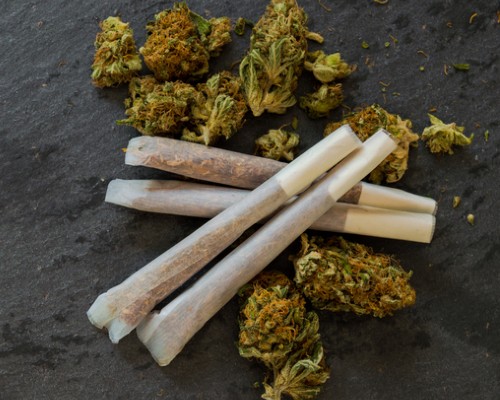 Teenagers who use cannabis frequently may be more likely to have children born preterm, when they become parents up to twenty years later, finds a new University of Bristol-led study. The research, published in Scientific Reports, repeatedly assessed 665 participants in a general population cohort on their tobacco and cannabis use between ages 14 to 29 years, before pregnancy.

- Details
- Hits: 1841
Denver Health’s substance treatment program sees roughly 500 youths each year for substance abuse, and Thurstone says 95 percent of the referrals he gets are for marijuana, which, despite popular opinion, has been proven to be addictive. Concentrates, with their higher THC levels, may be even more so. But it’s not just the standard trappings of dependence that are worrisome to health care professionals; it’s also that they’re observing a correlation between cannabis concentrates and mental health issues, such as depression, suicidal ideation, psychosis, and schizophrenia, as well as disturbing physical conditions such as cannabinoid hyperemesis syndrome, characterized by severe vomiting.
It is, of course, illegal in Colorado for anyone under 21 without a red card to purchase or use cannabis. The reality is that according to data from the state’s 2019 Healthy Kids Colorado Survey, 20.6 percent of Centennial State high schoolers and 5.2 percent of middle schoolers say they have used marijuana in the past 30 days. Those numbers haven’t changed much over the years, but one critical statistic has: The same survey found that between 2015 and 2019, the percentage of high schoolers who had recently dabbed (translation: inhaled concentrated doses of vaporized cannabis) went from 5.7 percent to 10.2 percent.
“The scary thing about this,” says Dr. Christian Hopfer, an addiction psychiatrist at UCHealth’s Center for Dependency, Addiction, and Rehabilitation (CeDAR), “is that this is a relatively recent phenomenon. We don’t know much about how extremely high doses of THC affect people, children or adults. We’re seeing greater risks of psychotic disorders and serious effects to cognition in our kids, but we have no real understanding of what these concentrates do to the developing brain.” That is why so many different stakeholders—doctors, researchers, legislators, psychologists, school districts, advocacy groups, and parents—have been throwing up flares. Their question: Are you sure your kids aren’t dabbing?
Marijuana might be the most synonymized noun in the world, but dabbing has a language all its own. Trust us, your kids know the lingo; you should, too.
Concentrates: Broadly refers to any cannabis product that has been made through a process where extraneous plant matter is mostly removed, leaving behind only aromatic oils called terpenes and cannabinoids, like cannabidiol (CBD) and THC
Dabbing: The method of flash-vaporizing cannabis concentrates—typically extracted oils of varying consistencies—on a hot surface and inhaling them to get high
Dab rig: Also called an oil rig, this is a water pipe—essentially, a sophisticated glass bong—that has attachments specifically designed for dabs of marijuana concentrate
Dabber: Sometimes called a wand, this is a small tool used to pick up a dab of concentrate and place it on the heated surface of a dab rig
Vape pens: Much like e-cigarettes, these are portable, pen-shaped vaporizers that are typically refillable with cartridges of concentrates
Dabs: A catch-all word for any concentrate or extract that can be flash-vaporized and inhaled
E-nail: A dabbing device that electronically heats the nail
Extracts: A specific type of concentrate made using solvents, like alcohol, butane, propane, or CO2; all extracts are concentrates, but not all concentrates are extracts
Hash: A pressed cannabis concentrate—made without using solvents—of the plant’s sticky glands that is commonly smoked and vaped but can also be dabbed
Nail: The metal, glass, or ceramic spike attached to a water pipe; dabs are applied to the nail once it has been heated up electronically or with a torch
Torch: A handheld butane or propane torch often used to heat the nail of a dab rig; a jet lighter also works
Types of Cannabis Concentrates
Concentrates and extracts don’t look like bud, get packaged like bud, or smell quite like bud, making them somewhat easier to conceal. Here, a not-at-all-comprehensive inventory of products that could be hiding in your teenager’s nightstand.

Photo by Matthew Stacey. Photo illustration by Sean Parsons
Shatter: An amber-colored extract that has a transparent, stiff, glasslike quality and breaks easily
Typically used with: a dab rig
Sugar: An extract that comes in a wide range of colors—very light yellow to almost amber—and has the consistency of wet, sappy sugar
Typically used with: a dab rig
Budder: A dark yellow extract that has a creamy, butterlike texture
Typically used with: a dab rig
Live Rosin: A high-quality solventless extract, usually pale yellow to golden in color with a gooey, honeylike consistency
Typically used with: a dab rig, a glass bowl, a joint, or a concentrates vape pen
Crumble: An extract that can be yellow, orange, or light brown and that has a soft, crumbly texture
Typically used with: a dab rig or sprinkled over flower in joints, pipes, and bongs
Wax: An extract that has a soft, waxy consistency
Typically used with: a dab rig or a concentrates vape pen
Distillate: A potent cannabis oil extract that has been stripped of all materials and compounds except for certain cannabinoids, like THC or CBD
Typically used with: a concentrates vape pen (with refillable cartridges)
Tell-Tale Signs That Your Kids Might Be Using Concentrates
Just because you think your teenagers don’t have the wherewithal to buy concentrates—much less a dab rig—doesn’t mean they can’t improvise ways to do both. If you’ve been finding soda cans or water bottles cut in half; if you’re missing butter knives from your drawers; if you’ve found unwound paperclips; if you can’t find your crème brûlée torch…your 15-year-old might be more resourceful than you realize. All of these items can be used to fashion a homemade dab rig. “You need to be paying attention to these things,” says Denver Health’s Dr. Christian Thurstone. “It’s reasonable that if you see something funny that you trust your gut and investigate.” What else should you be looking for? Lighters, small glass or silicone jars, and parchment sheets can be clues your kid is using. Money or sellable items that go missing are other hints. “A lot of parents struggle with parenting teens, especially when it comes to privacy,” says CeDAR’s Dr. Christian Hopfer. “If you’re concerned, privacy should not be respected, especially if there are mental health concerns. Parents are often unwilling to play cop—and that can have tragic consequences.”
Your (Kid’s) Brain On THC
The human brain isn’t fully developed until roughly age 25. When THC is introduced to that still-evolving organ, it impacts how neural connections are made. As one Colorado doctor put it, “the brain only gets one shot at growing up,” and THC can stunt that growth in ways we already know—and likely in many others that we don’t. (See also ALL Young Cannabis Users Face Psychosis and Cannabis & Suicide – Causal & Correlate?
Here' what (some of) the available science says about young people and cannabis.
Because the federal government classifies cannabis as a Schedule I drug, studying marijuana in the United States is a difficult—and frustrating—endeavor. Universities that rely on federal funding are loath to risk losing that cash to research marijuana on campus. Furthermore, any institution that does want to study cannabis must go through the feds to procure product; however, the cannabis grown at federally designated facilities rarely has THC concentrations higher than five or 10 percent. “There is a large body of research about what lower THC concentrations do and don’t impact,” says Dr. Sam Wang, a pediatric emergency medicine doctor at Children’s Hospital Colorado who is also board certified in medical toxicology. “But there is a paucity of literature about the impacts of high-THC doses on health.” Still, many health professionals say the results from the research that does exist with regard to addiction as well as high concentrations of THC are disturbing enough to merit red-flag warnings for youngsters. Local experts pointed us to several studies for a bit of light reading.
In March 2021, JAMA Pediatrics published the results of an addiction study executed by National Institute on Drug Abuse scientists. The research examined the proportion of adolescents and young adults who had developed substance use disorders (SUDs) in the previous year at various intervals since they first used certain drugs, including cannabis. The findings? Marijuana users between 12 and 17 had nearly double the prevalence (10.7 percent) of SUDs one year after first using cannabis compared with adolescents who first used alcohol (5.6 percent) or nicotine (6.6 percent). After three years, the addiction rate for cannabis among adolescents was 20.1 percent; it was 10.9 percent for those ages 18 to 25. The data, says the National Institutes of Health, emphasize the vulnerability of young teenagers to developing SUDs.
A mostly Europe-based study that aimed to identify patterns of cannabis use with the strongest effect on developing psychotic disorders received a lot of attention when it was published in the Lancet in March 2019. The conclusions were disturbing. Daily cannabis use was associated with higher likelihoods of psychotic disorders compared with people who had never used marijuana, but those numbers rose to nearly five times increased odds for daily use of high-THC types of cannabis. Another disconcerting finding: Those who had started using high-concentration cannabis by age 15 showed a doubling of risk of psychotic disorders compared with those who had never used.
Researchers in the United Kingdom published a study about the impacts of high-THC cannabis in JAMA Psychiatry in May 2020. The question they posed: Does high-THC cannabis increase risks for problems resulting from cannabis use, common mental disorders, and psychotic experiences, after controlling for early-life mental health symptoms and frequency of use? The short answer is yes. Of the 1,087 participants who reported cannabis use in the previous year, use of high-THC cannabis was associated with a significant increase in the frequency of cannabis use, likelihood of cannabis-related problems, and rates of anxiety disorder.
Are there fallacies about pot’s addictive qualities?
Marijuana is often downplayed for its addictive qualities when compared to other substances of abuse. I often hear from my clients, “I was just smoking pot.” THC activates the reward circuitry of our brains in ways that may cause this circuitry to be hijacked. While the effects of marijuana may wear off after just a couple of hours, the half-life of THC is quite long. The half-life of THC for mild users is between one and two days, but THC can still be traced in the system of a mild user for weeks afterward. For those who use cannabis frequently or use higher concentrations of THC, the half-life is between one and two weeks and THC lasts within their systems for much, much longer. This accrual of THC leads to increasing tolerance and the belief that there isn’t much to the withdrawal from cannabis. The higher the THC, the higher the addictive potential. Once the body becomes acclimated to the presence of THC, withdrawal symptoms kick in.
Withdrawal isn’t the only thing we need to worry about with frequent THC use, right?
Moderate to severe cannabis use is associated with reductions in two measures of intelligence and cognitive ability: working memory and processing speed. More research is needed to definitively state whether these reductions are permanent or temporary in adolescents or young adults. For adolescents who use cannabis, however, there are studies that show that these reductions are permanent and don’t recover in adulthood, even if they stop using.
This Wasn’t In The Parenting Manual
“The first time my son got suspended from school, I remember his coach said to me, ‘Don’t be too hard on him; it’s just pot.’ He said that because my son was an athlete and a good kid. He was just 14. But within two months, my son exited his life. He became a different human being. His joie de vivre was impacted. One day I got in a fight with him about not showing up to school, and I said, ‘I think this is the pot. You have to stop.’ He said, ‘If I have to stop smoking pot, I’m going to kill myself. In fact, I’m going to kill myself right now.’ He went to his room and locked the door. I called the police for help, and it was a cop who told me I needed to be very concerned about his marijuana use. He said, ‘It’s not like what you smoked when you were younger.’ That’s how I learned about dabbing. My son was a fun, sweet, supersensitive kid. Then he wanted to be in his room all the time. He was buying shatter and wax through a senior with a medical card. They did it over Snapchat. One night after he came home from work—he got a job at 15—he was looking for something in the backyard shed. He was crying. He told me he used to have fun before drugs, but now he only had fun when he was doing drugs… But then he developed cannabinoid hyperemesis syndrome; he was just vomiting all the time. I took him to the ER 11 times in nine months. Eventually we found a doctor who said, ‘This is the pot.’ He looked at her and said, ‘This is medicine!’ He stopped because of the hyperemesis, but his executive functioning has been impacted and there are cognitive issues. I wonder why an 18-year-old can get a medical card and buy two ounces a day but can’t buy tobacco or a Coors Light.”
- Details
- Hits: 1808
Abstract
 Objective: The authors investigated the rates of conversion to schizophrenia and bipolar disorder after a substance-induced psychosis, as well as risk factors for conversion.
Method: All patient information was extracted from the Danish Civil Registration System and the Psychiatric Central Research Register. The study population included all persons who received a diagnosis of substance-induced psychosis between 1994 and 2014 (N=6,788); patients were followed until first occurrence of schizophrenia or bipolar disorder or until death, emigration, or August 2014. The Kaplan-Meier method was used to obtain cumulative probabilities for the conversion from a substance-induced psychosis to schizophrenia or bipolar disorder. Cox proportional hazards regression models were used to calculate hazard ratios for all covariates.
Results: Overall, 32.2% (95% CI=29.7-34.9) of patients with a substance-induced psychosis converted to either bipolar or schizophrenia-spectrum disorders. The highest conversion rate was found for cannabis-induced psychosis, with 47.4% (95% CI=42.7-52.3) converting to either schizophrenia or bipolar disorder. Young age was associated with a higher risk of converting to schizophrenia. Self-harm after a substance-induced psychosis was significantly linked to a higher risk of converting to both schizophrenia and bipolar disorder. Half the cases of conversion to schizophrenia occurred within 3.1 years after a substance-induced psychosis, and half the cases of conversion to bipolar disorder occurred within 4.4 years.
Conclusions: Substance-induced psychosis is strongly associated with the development of severe mental illness, and a long follow-up period is needed to identify the majority of cases.
- Changes in cannabis use modes among Canadian youth across recreational cannabis legalization: Data from the COMPASS prospective cohort study
- Genotoxic Portfolio of Cannabis Info Sheet
- Pandemic and Pot – The impact on Supply & Demand (Australia)
- Weeding out the truth: a systematic review and meta-analysis on the transition from cannabis use to opioid use and opioid use disorders, abuse or dependence