
- Details
- Hits: 8
Teen cannabis use is under fresh scrutiny after a new report from the US Centers for Disease Control and Prevention (CDC) found the drug in 42.7 per cent of overdose deaths among 12 to 17 year olds. That is the highest share of any age group. However, detection alone does not prove causation, so the details matter.
The findings raise a practical question for parents, teachers and health workers. If a teenager is using cannabis, what else might be within reach?
 What the new CDC data says about teen cannabis use
On 3 September 2026, CDC investigators reported on 209,166 overdose deaths between January 2021 and June 2025. The data covered 31 states and the District of Columbia. Cannabis turned up in 43,880 of those deaths, or 21.0 per cent. Yet it was the only drug involved in just nine cases, which is 0.004 per cent of the total.
The adolescent numbers stand out even more. In the latest six months of data, from January to June 2025, cannabis appeared in 44.6 per cent of deaths among 12 to 17 year olds. In 2024 the figure was 35.9 per cent. Stimulants showed up in 69 per cent. Many of these deaths involved fentanyl and stimulants together, so cannabis may be a marker of wider experimentation, impaired judgement, or both.
General Barrye L. Price, president and chief executive of CADCA, sees a clear message. He said the report shows why community based prevention among young people deserves higher priority, because cannabis may be “a major clue to more extensive polydrug use” in teens.
Detection is not causation
Fentanyl remains the main driver of overdose deaths, and it can kill without any help from cannabis. Even so, that does not make THC, the intoxicating substance in cannabis, irrelevant. Whether THC from the plant worsens the breathing problems fentanyl causes is still unknown.
The science so far is mixed. In a trial of 18 healthy adults, inhaled THC did not worsen the breathing effects of oxycodone, although sedation rose slightly. However, oxycodone given to healthy adults in a laboratory is a long way from illicit fentanyl and cannabis in intoxicated teenagers. That study has not been done. Meanwhile, in rats, alcohol intensified the effect of fentanyl on breathing.
Why adolescent cannabis use is a warning sign
Earlier CDC research helps explain the concern. It found illegally made fentanyl in 83.9 per cent of overdose deaths among people aged 10 to 19. Yet only 35 per cent of those young people had a documented history of opioid use. Nearly a quarter showed evidence of counterfeit pill use.
Most were not shopping for fentanyl. Instead, they believed they were buying oxycodone, Xanax or another familiar looking pill, and they received a lethal dose. Under the influence of cannabis, it may be easier to say yes to a street pill that looks genuine but is not.
Longer term risks sit alongside these findings. Studies that follow young people over time link adolescent cannabis use with later depression, suicidal thoughts and suicide attempts. About half of 18 to 20 year olds who used cannabis in the previous year met the criteria for cannabis use disorder, and most cases were moderate or severe. Research also ties the condition to unintentional overdose death among young people with mood disorders.
Slow to spot, slow to save
Timing may be where cannabis matters most. The CDC reports that two thirds of adolescent overdose deaths had a potential bystander present, yet records show no response in most of those cases. Records also show naloxone use in only 30.3 per cent of all deaths.
To an untrained eye, an overdose can look like sleep. Teens may not know that slow, irregular or absent breathing is an emergency. A person under the influence may also decide a friend can simply sleep it off. That confusion can delay a dose of Narcan and a call to 911, and fentanyl leaves very little time for either.
Alcohol deserves equal attention. It is a central nervous system depressant, so it adds sedation and breathing suppression to opioids. Older national data found alcohol in about 15 per cent of opioid overdose deaths. The new report gave no adolescent alcohol figures, so future studies should look at alcohol and cannabis both together and separately. They should also record active delta 9 THC rather than long lasting inactive metabolites. Finally, they should capture what happened at the scene, including whether anyone recognised the overdose and whether anyone gave naloxone.
What families can do about teen cannabis use
Families do not need a perfect study before they start talking. Treat any pill sold on the street as oxycodone, alprazolam or another medication as counterfeit and potentially fatal. In fact, any pill that a doctor did not prescribe and a licensed pharmacy did not dispense may contain fentanyl.
Teen cannabis use, like tobacco or alcohol use, should open a conversation. Parents should not brush it aside in the hope it passes. Useful questions are simple. What are you using? What are your friends using? Where do the pills and vape cartridges come from? Cannabis use may signal a willingness to experiment and access to other drugs, so keeping naloxone available also makes sense.
The safest time for that talk is before the emergency.
Source: psychologytoday
- Details
- Hits: 12
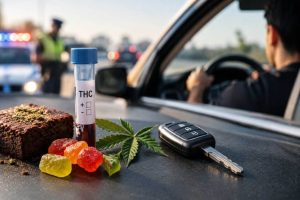
A driver eats a cannabis gummy, waits a while, gets behind the wheel and returns a low THC reading. Surely that settles it? A new randomised trial says it does not. Cannabis edibles and driving do not follow the tidy rule that a small number in the blood means a clear head.
That rule matters because of a proposal now being run in Australia. It would exempt medicinal cannabis patients from the presence offence if they were not impaired and took their medicine as prescribed. The catch is that it depends on someone being able to show a driver is not impaired, and the evidence says a blood test cannot do that.
A Canadian trial, a Swiss study from 2005, a 2018 hair testing study and a research review on medicinal cannabis and driving each add a piece. Science should protect the people on the road. It should not be bent to protect the habits of the person holding the gummy.
 What the Toronto Trial Found
Researchers at the Centre for Addiction and Mental Health in Toronto recruited 40 adults aged 19 to 45 who used cannabis at least weekly and edibles at least monthly. Across four sessions each volunteer ate gummies containing 0, 2, 10 or 20 mg of THC, and nobody knew which dose they had. The results appeared in JAMA Network Open on 31 August 2026.
A driving simulator measured how well they held their lane two and five hours after eating. Compared with placebo, lane position variability rose by 3.3 cm at 20 mg and by 2.0 cm at 10 mg. The 2 mg dose made no significant difference. Reaction time at 20 mg was also slower, by 0.034 seconds.
The dose effect was assessed across both the two and five hour tests, and it did not differ significantly between them. The authors do say the study was not powered to compare the two times directly, so that point is a pointer rather than proof. They also note that earlier work treats a 2.4 cm rise as a meaningful sign of impairment, comparable to a blood alcohol concentration of 0.05 per cent. The 20 mg dose cleared that mark. The 10 mg dose fell just short.
Cannabis Edibles and Driving: Impaired Below the Limit
Average peak blood THC reached only 3.4 ng/mL after 20 mg and 1.6 ng/mL after 10 mg. Both figures sit near or below the common per se limits of 2 and 5 ng/mL. Of 294 valid blood values taken at two and five hours, just eight topped 5 ng/mL, seven of them at 20 mg. Yet lane control measurably worsened.
The same team ran an earlier trial of smoked cannabis with an identical design. High potency smoked cannabis raised lane variability by 4.1 cm, with blood THC at 30.3 ng/mL. The 20 mg gummy raised it by 3.3 cm, with peak blood THC almost ten times lower. The route changed and the effect on lane control stayed similar, but the number fell away. The paper does not claim a neat link between the two measures. What it shows is impairment at readings below the thresholds, and the authors warn that edibles may pose a unique challenge for roadside enforcement.
Cannabis edibles and driving now collide with laws built around a number. A driver can be measurably impaired and still land under the limit.
More Than Two Decades Old
None of this is new to the laboratory. Research on cannabis edibles and driving reached the same awkward point in 2005, when Swiss researchers gave eight men 20 mg of dronabinol, a synthetic THC sold as the prescription medicine Marinol, or hemp milk containing 16.5 or 45.7 mg of THC. All three treatments differed from placebo on a tracking test, and the strongest dose caused marked impairment.
The blood results were awkward even then. Mean peak THC reached 8.4 ng/mL after the strongest dose, but the active metabolite 11 hydroxy THC peaked higher, at 12.3 ng/mL. Adding the two together estimated impairment better than THC alone. After the strongest dose the sum stayed above 4.6 ng/mL for seven hours, the same window in which tracking performance suffered. Two of the eight volunteers left the study after anxiety, one of them after the dronabinol capsules.
The volunteers also showed how judgement bends. They refused to drive a friend to a party, yet moderately agreed to drive an ill child to hospital. They knew they were affected, and a sick child still changed their answer.
The Arguments Now Being Run
The research review sets out the case being made in Australia, where advocates want THC medicines treated differently from other prescriptions. It accepts the exemption looks like a low risk change to the law. It also calls it a “camel’s nose in the tent” and asks how police would know where a driver’s THC came from.
The review examines a University of Sydney Lambert Initiative article arguing that blood and oral fluid THC are relatively poor or inconsistent indicators of impairment. It points out that the authors receive salary support from a centre for medicinal cannabis research, and that they call for more research rather than action. It also stresses that they do not claim cannabis is never impairing.
The Toronto trial backs them on one point: the number is unreliable. The two sides split over what follows. If blood cannot show who is fit, it cannot clear anyone either. The review concludes that this calls for caution, not exemption.
Tolerance gets similar scrutiny. The review cites a 2021 Accident Analysis and Prevention study of daily and occasional users on a driving simulator. Direct comparisons of lane control between the two groups were not statistically significant, and the study did not conclusively show that tolerance made daily users safer or more competent drivers. The review also cites a meta analysis suggesting regular users do experience less impairment, which it treats as a caveat rather than a reassurance. The Toronto volunteers all used cannabis at least weekly, and they still drove worse at 10 and 20 mg. A 2020 simulator study, also cited, found people felt their impairment had gone before their driving measurably recovered.
How Long Is Long Enough for Driving After Cannabis Edibles?
The wait is the practical question. The review reproduces Colorado’s public health advice that less than weekly users wait at least six hours after smoking, or eight hours after eating or drinking cannabis, before driving. The Toronto team tested at two, five and 24 hours. At 24 hours only maximum speed differed, at the 10 and 20 mg doses. Nothing was measured between five and 24 hours, so the authors concede the true length of impairment is unknown. The Swiss team noted that edible effects arrive later and last longer than those from smoking.
Wider data shows why the stakes are high. Among 5,032 Colorado drink and drug driving case filings screened for cannabinoids, 57 per cent tested positive for THC, with a median of 5.2 ng/mL. In Washington State, cannabis involvement in fatal crashes rose from 9 per cent before legalisation to 19 per cent after, an estimate that includes imputed data for drivers who were not tested.
Testing can also look backwards. A 2018 study of 587 hair samples found THC in 70.4 per cent, and in 12.9 per cent of those cases neither metabolite was present. The researchers recommend checking both metabolites to tell genuine use from outside exposure or contamination. Hair can point to past use. It cannot show how fit a driver is today.
The Only Safe Reading of the Evidence
The studies have limits. The Toronto drives took place in a simulator on a quiet rural road, and the volunteers were healthy adults who used cannabis regularly. Even so, the direction has stayed the same from Lausanne in 2005 to Toronto in 2026, and from prescription capsules to commercial gummies.
A blood test cannot certify a driver as fit. Tolerance has not been shown to switch the effect off, and a gummy can affect lane control hours after the last bite. If THC has been taken, the keys stay down. On cannabis edibles and driving, the public deserves a rule built around the road, not around one number.
Sources:
- Assessment of Driving Capability Through the Use of Clinical and Psychomotor Tests in Relation to Blood Cannabinoids Levels Following Oral Administration of 20 mg Dronabinol or of a Cannabis Decoction Made with 20 or 60 mg Ag-THC*
- Dose-Dependent Effects of Cannabis Edibles on Simulated Driving Performance A Randomized Clinical Trial
- Proof of active cannabis use comparing 11-hydroxy-∆9-tetrahydrocannabinol with 11-nor-9-carboxy-tetrahydrocannabinol concentrations
- Medicinal” Cannabis and Driving – is it an Issue?
- Details
- Hits: 15
The cannabis cure myth survives on two words. Potential. Continuing. Both keep reappearing through the scientific literature. Three studies anchor this review: a 2009 pharmacology survey, a 2017 phytochemistry review, and a 2023 chemical analysis. Together, they span fourteen years of dedicated research into a single plant. Even so, none of the three claims a cure. Read closely, they show a field that keeps refining its chemistry. Meanwhile, the therapeutic promise attached to that chemistry sits exactly where the language always placed it. Potential. Not proven.
The Same Word, Eight Years Apart
The 2017 phytochemistry review supplies its own timeline. Cannabis and its constituents, the authors note, have been the focus of extensive chemical and biological research for almost half a century. That span dates back to the discovery of the chemical structure of THC. Notably, the admission comes from inside the field’s own literature, not from an outside critic.
 Earlier still, in 2009, pharmacologist Lumir Ondrej Hanus surveyed the state of cannabinoid and endocannabinoid research. His review found close to fifteen thousand published articles on Cannabis sativa L and cannabinoids. In addition, a further two thousand articles covered the body’s own endocannabinoid system. Hanus catalogued the plant’s history, its constituent compounds and their biosynthesis. He also detailed the pharmacology of natural cannabinoids alongside synthetic agonists and antagonists. Even so, the review closed on the pharmacology and potential therapeutic uses of endocannabinoid congeners. Potential, not proven. The abstract makes that distinction for itself.
Eight years later, in 2017, a phytochemistry review led by Mahmoud ElSohly took the count further. By then, researchers had identified more than 560 separate constituents in the plant. The review credited recent discoveries with potential applications across a list of serious conditions. Glaucoma, depression, neuralgia, multiple sclerosis and Alzheimer’s disease all appear. So does easing the symptoms of HIV, AIDS and cancer. Still, read the sentence carefully and the qualifier survives intact. Potential applications gave momentum to further study. However, they did not amount to a settled treatment for any single condition on that list.
In short, eight years of accelerating publication sit between the two reviews, and the operative word never moved.
The Newest Study Does Not Test the Claim
The most recent of the three sources arrived in 2023, and it changes the subject entirely. A Japanese team led by Rie Tanaka used liquid chromatography quadrupole time of flight mass spectrometry. The technique separates and identifies compounds by their precise mass. In practice, researchers used it to measure eleven named cannabinoids across the tissues of two cannabis chemotypes.
In the drug type plant, for instance, the team found tetrahydrocannabinol acid concentrated most heavily in the bracts, at 28.4 micrograms per milligram. The buds carried 24.8 micrograms per milligram. Meanwhile, the leaves trailed between 5.1 and 10.5 micrograms per milligram, depending on their position on the stem. In the fibre type plant, by contrast, cannabidiol acid followed a similar gradient. Bracts held 27.5 micrograms per milligram, buds held 10.6, and leaves ranged from 1.5 to 3.3. Six further cannabinoids also featured: delta 9 THC, cannabigerolic acid, cannabinol, cannabigerol, cannabichromene and tetrahydrocannabivarin. Again, researchers found them concentrated mainly in the same three tissues, the bracts, buds and leaves.
The plant material itself came from a defined sampling method, set out in the diagram supplied alongside the study. A drug type plant stood 2.7 metres tall, divided into eight segments of roughly 0.3 metres, running from base to tip. Likewise, a fibre type plant stood 3.3 metres tall, divided into ten segments of the same width. Overall, tracking cannabinoid concentration metre by metre up two different plants is a study in analytical precision.
The raw output behind those figures looks like the chromatogram supplied alongside the study. Six traces, each locked to a specific mass measurement, track signal intensity over sixteen minutes of separation time. Several traces, moreover, carry two distinct peaks rather than one. That pattern points to compounds that share a mass but differ in structure, so they separate at different points in the run. In short, this is meticulous analytical chemistry. It identifies which molecule is which. Even so, it does not test a single condition from the ElSohly review, and it involves no patient, no symptom, no clinical outcome of any kind. If anything, this newest addition to the cannabis cure myth’s evidence base narrows the claim rather than widening it.
A Biosynthesis Map, Not a Treatment Map
The complexity running through these three studies has a visual form too. The plant’s own biosynthesis pathway, mapped out in a diagram supplied alongside the cited research, shows it clearly. A single precursor compound, cannabigerolic acid, sits at the centre of the network. From there, enzymes convert it along three separate branches, into cannabichromenic acid, cannabidiol acid and tetrahydrocannabinol acid. Exposed to heat or light, each of those in turn loses a carbon dioxide molecule and converts again, into cannabichromene, cannabidiol and THC. Alternatively, cannabigerolic acid can convert directly into cannabigerol by the same route. Tetrahydrocannabinol acid can additionally oxidise into a further acid form, which then decarboxylates into cannabinol.
Eleven named compounds. One shared precursor. Several overlapping conversion routes. Altogether, that is a description of chemical complexity. On the evidence supplied here, though, it stops short of a description of medicine.
Botany, Not the Biology of Disease
The 2017 review frames itself as an overview of the plant’s botany and cultivation alongside its phytochemistry. The supporting material reflects that scope closely. Photographs accompanying the cited research, for example, document the plant down to its structural anatomy. They show the kernel and shell of an individual seed. They also show the cortex, epidermis, xylem and pith inside a cross section of the stem. Finally, they show the periderm and cortex of the root system beneath it.
Even so, none of that material speaks to a therapeutic outcome. Instead, it is the groundwork of plant science, the characterisation that has to happen before researchers can even frame a clinical question. On the evidence supplied here, this groundwork still absorbs a considerable share of the research effort.
What Fourteen Years of These Sources Actually Add Up To
Put the three sources together and a consistent pattern appears. The 2009 review counted articles and catalogued pharmacology in the language of potential. The 2017 review, in turn, counted constituents and repeated that same word for the same list of conditions. It also confirmed, from inside its own literature, that the underlying research already stretched back close to half a century. Meanwhile, the 2023 study, the newest and most technically advanced of the three, does not engage with therapeutic claims at all. Instead, it refines the chemical map further still, down to the microgram, tissue by tissue, plant type by plant type.
None of the three studies supplied here reports a cure. None of them claims one. What they document, consistently and across fourteen years, is a plant whose chemistry keeps getting mapped in finer detail. Yet the clinical promise attached to that chemistry sits exactly where each source leaves it. Potential. Pending. Not yet proven. In the end, the cannabis cure myth persists because the research keeps circling that same word, study after study, year after year.
(Source: WRD News)
- Details
- Hits: 35
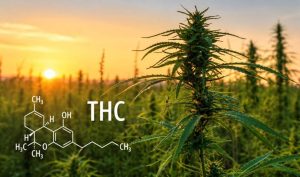 The oral fluid THC test can flag recent THC use in a driver with high accuracy. But it cannot say how much THC sits in the blood. That is the verdict of a Columbia University study published in Injury Epidemiology in 2018. Meanwhile, Australia’s food regulator has explained in a letter what the law covers when THC turns up in food. The two documents come from different worlds, yet both deal with how THC gets checked.
How the Oral Fluid THC Test Performed on the Road
The research team, led by Huiyan Jin and Qixuan Chen, used data from the 2013 National RoadsideSurvey of Alcohol and Drug Use by Drivers in the United States. First, they picked out 4,596 drivers who gave both an oral fluid sample and a whole blood sample. Overall, 8.9 per cent tested positive for THC in oral fluid and 9.4 per cent in blood.
Then came the accuracy check. Using the blood result as the benchmark, the oral fluid THC test showed a sensitivity of 79.4 per cent and a specificity of 98.3 per cent. In plain terms, it caught about four in five drivers with THC in their blood. It also rarely flagged a driver who had none. The authors called it a highly valid method for detecting the presence of THC in the blood.
Odds ratios tell the same story. After adjusting for alcohol, time since last use and driver details, a positive oral fluid result went with about eleven times the odds of a positive blood result.
Why Roadside THC Screening Cannot Replace a Blood Result
However, the study drew a hard line at concentration. Oral fluid THC explained only about 29 per cent of the variation in blood THC. A 10 per cent rise in oral fluid THC matched just a 2.4 per cent rise in blood THC. The authors advised against working out blood levels from an oral fluid result.
That matters because blood is the standard for legal limits. The paper describes THC in blood as a marker of recent use, within roughly one to eight hours. It also notes that 20 US states have per se limits for marijuana impaired driving. Four use 5 nanograms per millilitre, and the rest apply zero tolerance. So a screen can show presence, but it cannot settle a threshold.
The test also had weak spots. Sensitivity fell to 54.6 per cent among drivers older than 55. Specificity dropped to 66.7 per cent among drivers who had used marijuana within the past 24 hours. In addition, the authors warned of possible bias. Fewer than half of eligible drivers agreed to give both samples.
Younger Drivers and Recent Use Stand Out
The figures also show who is most likely to test positive. Among drivers aged 16 to 20, 15.9 per cent had THC in their blood. For drivers aged 55 and over, the rate was 3.1 per cent. Among drivers who reported using marijuana in the past 24 hours, 75.6 per cent tested positive.
The paper adds that marijuana detection among drivers in fatal crashes tripled from 4.2 per cent to 12.2 per cent between 1999 and 2010. Because THC in blood points to recent use, those numbers underline why early conversations with young people matter.
What Australia’s Food Regulator Told Drug Free Australia
Food Standards Australia New Zealand (FSANZ) wrote on 11 September 2026 to Herschel Baker, International Liaison Director at Drug Free Australia. The letter replies to his 4 August correspondence about hemp derived THC products. Matthew O’Mullane, General Manager of the Food Safety Branch, signed it.
The regulator explained that Standard 1.4.4 of the Food Standards Code lists cannabis as a prohibited plant for food unless an exemption applies. One exemption covers specified foods from low THC hemp seeds. Here, the Code defines low THC hemp as Cannabis sativa with no more than 1 per cent delta 9 THC in the leaves and flowering heads.
Mr Baker had raised concerns about delta 8 THC, delta 10 THC, tetrahydrocannabiphorol, THCA and other variants. In reply, FSANZ said the standard sets maximum levels for CBD and total THC. Total THC means delta 9 THC plus delta 9 THCA. Foods must come from hemp seeds, and they may contain only cannabinoids that occur naturally in or on those seeds. FSANZ built these rules on a risk assessment under Proposal P1042.
Enforcement sits with state and territory food agencies. FSANZ suggested that anyone worried about a product raise it with the local agency. It also said it does not set standards for medicinal cannabis or other non food cannabis derived products. The Therapeutic Goods Administration and state and territory authorities regulate those. Still, the letter does not announce any change to the Code.
Two Documents, One Question of Where THC Gets Checked
Each system answers a different question. The Code limits what THC food may carry, and state agencies enforce it. By contrast, the oral fluid THC test asks whether THC is present in a driver at all. Neither document links hemp foods to positive roadside results. The study also covers drivers in the United States only.
For now, the letter leaves the Code as it stands, and the research leaves the blood test as the benchmark. Until that changes, the oral fluid THC test remains a screen.
(Source: WRD News)
- Details
- Hits: 85
More than 20,000 marijuana related deaths appeared on US death certificates between 2000 and 2024. That is the finding of a new analysis of the CDC’s WONDER database. The figures count marijuana poisoning or a marijuana related disorder as the underlying cause of death or a contributing one. Taken together, they suggest cannabis related deaths carry a higher toll than most people assume.Connor Kubeisy first published the analysis for The Drug Report on 23 July 2026. It draws on the CDC’s Multiple Cause of Death data. Every US death certificate records one underlying cause of death, plus up to twenty contributing causes. A physician or medical examiner completes each certificate. The CDC and World Health Organization define the underlying cause differently from a contributing one. An underlying cause is the disease or injury that started the fatal chain of events. A contributing cause played a role without being the direct trigger.
Marijuana Poisoning and Drug Overdose Deaths Marijuana poisoning carries the ICD 10 code T40.7. It can appear as a contributing cause alongside many different underlying causes of death. In 2024, 881 deaths recorded a drug overdose as the underlying cause, with marijuana contributing factor. That is part of a wider pattern of marijuana related deaths tracked in the CDC data. The figure works out to roughly 1.1 per cent of the 79,384 total drug overdose deaths that year. Yet it has grown 20 fold since 2000, when physicians recorded just 40 such deaths. The annual count peaked at 1,161 in 2022, then eased alongside a broader national fall in overdose deaths.
Broaden the count to any drug overdose, whether underlying or contributing. The total climbs further still. In 2024, 1,182 deaths recorded a drug overdose alongside marijuana poisoning as a contributing cause. Among these, poisoning was the most common underlying cause, with 888 deaths. Car crashes caused 117 of the deaths, firearms 45, heart disease 43, drowning 18, suffocation 18 and falls 10. Counting marijuana poisoning as a contributing cause regardless of the underlying cause reaches 1,198 deaths in 2024 alone. Across the full 2000 to 2024 period, the total reaches 14,025. That is one of the clearest single measures of cannabis related deaths in the data.
Mental and Behavioural Disorders Linked to Cannabis Use
Poisoning is not the only way marijuana appears on a death certificate. Mental and behavioural disorders due to cannabinoid use carry the ICD 10 code F12. They include withdrawal, withdrawal with delirium, psychotic disorder and amnesic syndrome. These conditions typically develop over an extended period of use, rather than from a single acute event. That makes them a slower moving strand of marijuana related deaths, distinct from the overdose figures above.
Deaths recording a marijuana related disorder as the underlying cause rose steadily. The annual count climbed from fewer than ten in 2000 to 35 in 2024. That totals 247 across the whole period. Counting the disorder as either underlying or contributing lifts the annual figure 12 fold. It rose from 68 deaths in 2000 to 824 in 2024. The cumulative total across the period reaches 7,881. Among the 824 deaths in 2024, poisoning was the leading underlying cause, with 180 deaths. Heart disease followed with 134, car crashes with 62 and chronic lower respiratory disease with 57. Firearms, diabetes and cancer accounted for 46, 36 and 35 deaths respectively.
The True Scale of Marijuana Related Deaths
Combine both categories and a clear picture emerges. In 2024, 1,918 deaths recorded marijuana poisoning, a marijuana related disorder, or both, as the underlying or contributing cause. That is up sharply from 129 in 2000. Across the full period, marijuana related deaths reached 20,985.
Even that figure almost certainly understates the toll. Analysts could only count deaths where a physician explicitly listed a marijuana related ICD 10 code on the certificate. Cannabis impairment can partly cause a fatal car crash. Yet the death would not register in these numbers unless a physician recorded that code alongside it. The tally also excludes cannabinoid hyperemesis syndrome, a severe vomiting condition linked to chronic cannabis use. That condition only received its own ICD 10 code in October 2025. The tally excludes cannabinosis too, a chronic lung condition tied to cannabis smoke. That means the real scale of cannabis related deaths sits somewhere above the numbers reported here.
A Widening Gap Between Perceived Risk and Reality
The climb in marijuana related deaths sits awkwardly against public attitudes towards the drug. In 2024, only 25.8 per cent of Americans saw a great risk in smoking marijuana once a week. That finding comes from the same CDC WONDER analysis. Marijuana use keeps spreading, and cannabis products keep growing more potent than those available decades ago. The gap between perceived risk and recorded harm looks set to widen rather than close.
This same CDC WONDER platform draws on death certificates for US residents across decades. It covers demographic detail such as age, sex, race, ethnicity, state and county, alongside cause of death codes. That scale and consistency lets researchers track a slow moving trend, like the rise in marijuana related deaths, with confidence.
(Source: WRD News)